
The Mental Health Shell Game: What the DeFoor and Hinton Cases Reveal About Cincinnati Justice
How Cincinnati Lawyers Use Mental Health: The Hinton/DeFoor Cases
By: Richard L. Crosby
January 6, 2025
Cincinnati is currently the epicenter of a legal theatre where the script is written in "symptoms," not evidence. Two names are dominating the headlines and the Hamilton County dockets this week: William DeFoor and Rodney Hinton.
To the public, their actions are "senseless" outbursts of violence. To their attorneys, these actions are "symptoms." But to a former insider, these cases expose a county court system ripe for exploitation—a system that seeks to label everyone as “mentally ill” while lacking the spine or the resources to actually diagnose, monitor, or treat them.
William DeFoor, 26, is currently the face of a federal and local firestorm. Early Monday morning, while Vice President J.D. Vance and his wife were returning to D.C., DeFoor allegedly targeted Vance’s Cincinnati home in a violent act of vandalism.
The initial judicial response was a masterclass in local politics. Hamilton County Municipal Court Judge Jayna Trotter Bratton—a jurist propped up to the bench by the Hamilton County Democratic Party primarily for her sex and ethnicity—set DeFoor’s bond at a staggering $11,000. For an attack on the home of the sitting Vice President, that’s not a bond; it's a polite suggestion. I don’t care the feds were going to pick him up. If it’s your court, rule it! (DeFoor’s parents are also wealthy Democrat donors, but we won’t touch that at this point!)
By Monday afternoon, the feds stepped in, ordering DeFoor to remain in custody pending a Friday hearing. His attorney, Paul Laufman, immediately leaned into the modern defense playbook, telling the judge that his client’s “mental health was a big factor.” In today's climate, that phrase acts as a universal "Get Out of Jail" card.
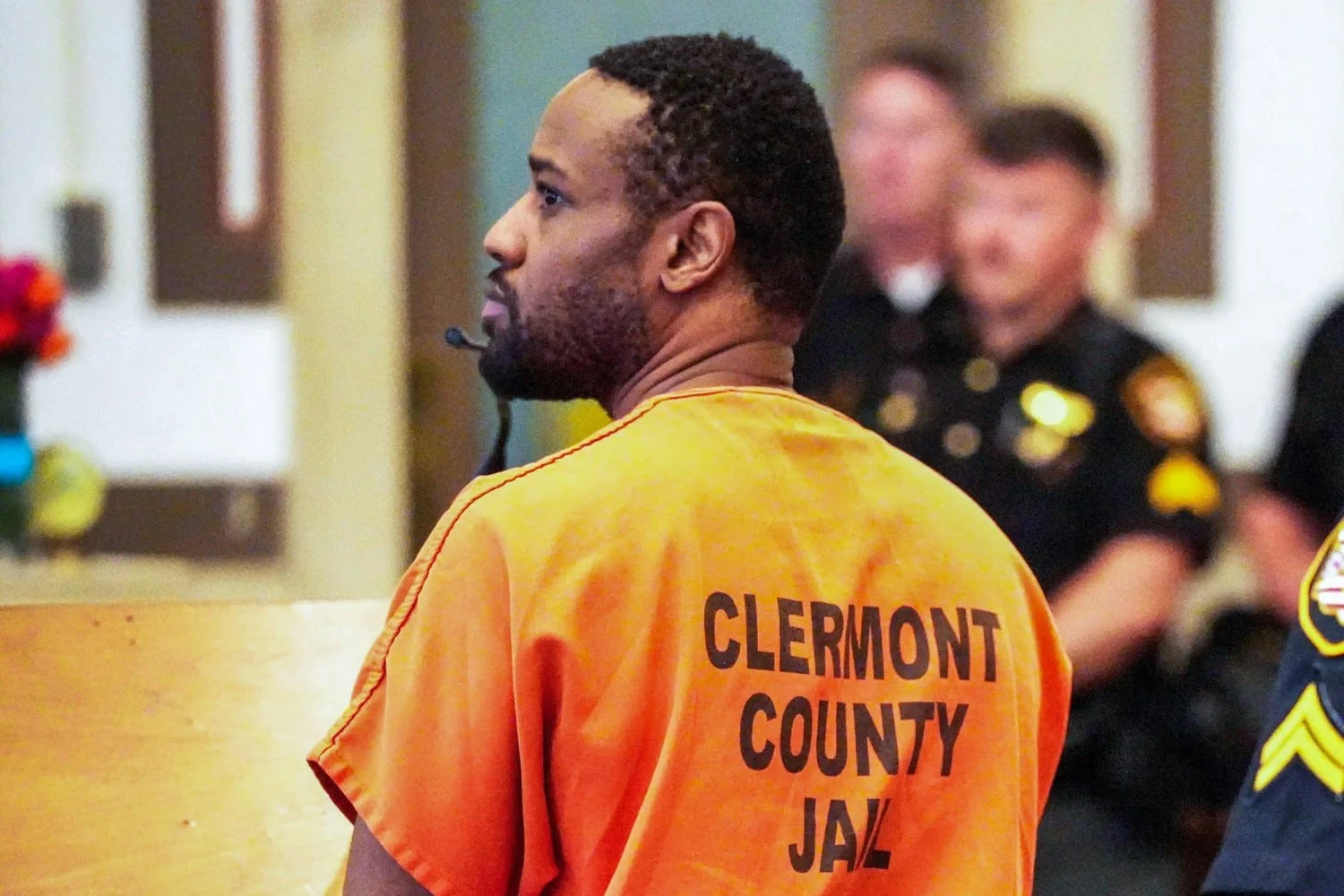
Then there is Rodney Hinton. Charged with the aggravated murder of HCSO Deputy Larry Henderson, Hinton’s case reached a critical juncture this week.
Based on the reports of three experts, Prosecutors and Defense counsel agreed that Hinton suffers from a bipolar condition. Under Ohio’s Serious Mental Illness (SMI) laws, that finding effectively removed the death penalty from the table. Hinton’s lead counsel, Clyde Bennett, has been unwavering: his client should be treated as a patient, not a criminal.
Let me be crystal clear: our system should absolutely protect the most vulnerable among us—those truly suffering from profound mental disease or defect. But the issue is that the system has begun to rubber-stamp every case under the guise of "treatment" to avoid the heavy lifting of real justice.
Why does this happen? Follow the money.
The Prosecutors and the Court system don’t want to allocate the massive funds required for a proper, independent mental health evaluation and a long-term treatment plan for every defendant. Instead, they rely on screenings provided by "experts" who often lack the proper certifications or the time to give each matter the scrutiny it deserves.
Defense attorneys aren't stupid. They know exactly how to play this. The strategy starts at the initial intake meeting:
The Leading Question: Ask the client questions specifically designed to elicit responses that can be construed as trauma or mental instability.
The Threat: Approach the State with a pile of mental health filings.
The Fold: Prosecutors, eager to clear a bloated docket, offer a plea deal that mandates "court-recommended treatment" in exchange for a reduced charge.
Boom! You’ve just reduced a high-level felony to a potential dismissal through Intervention in Lieu of Conviction (ILC), or at the very least, knocked a violent felony down to a misdemeanor.
The Defendant is happy because they avoid prison. The State is happy because they cleared a case and secured a "conviction" (of some sort). It’s a win-win on paper, but a disaster in reality.
Am I saying Hinton and DeFoor don’t have mental health issues? No. These are two of the highest-profile cases in the city; they will receive their version of due diligence because the world is watching.
But for the other thousand cases on the Hamilton County docket—the ones that don’t make the 6 o'clock news—this is the "new normal." The result is a highly effective tool for defense attorneys and a court system that helps absolutely no one. We aren't curing the sick, and we aren't protecting the public. We're just moving paper.